

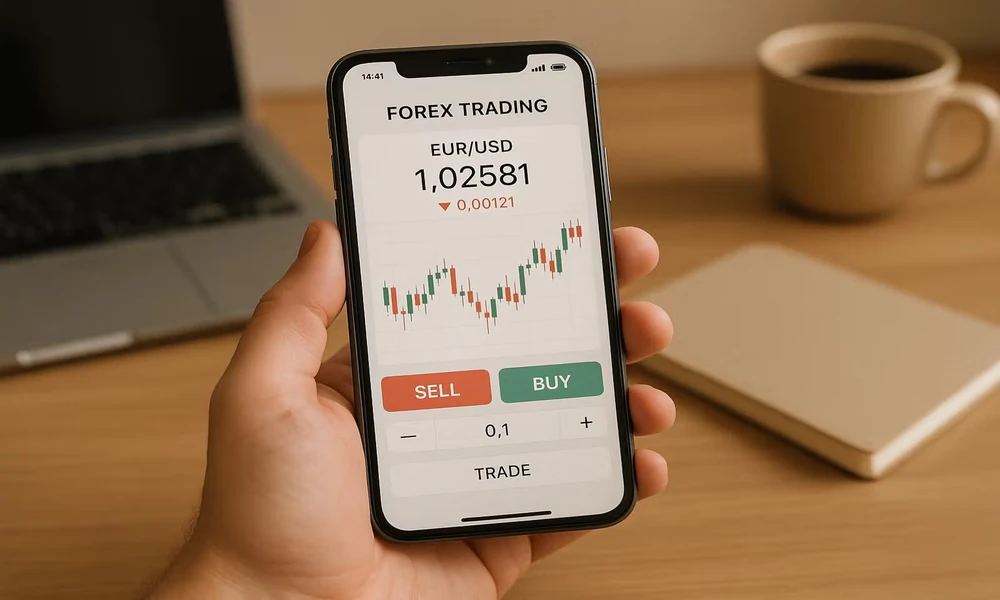
A Low Investment Trading App can appeal to users who want to begin participating in the market with relatively limited capital. The main advantage is accessibility: users may be able to start with smaller amounts, explore market tools, build watchlists, and gain practical familiarity without committing a large sum at once.
Starting small does not make market risk disappear. A low initial amount can still be exposed to sharp price movement, poor trade selection, excessive transaction costs, or concentrated positions. The stronger approach is to use smaller capital as a way to learn disciplined market participation rather than as an excuse to trade frequently.
Small Capital Changes the Way Costs Matter
When the investment amount is low, transaction costs can have a larger proportional impact.
Suppose an investor places several small trades.
Even modest charges can reduce the final result if the trade size is very small.
Users should understand:
- Brokerage
- Exchange-related charges
- Taxes
- Other applicable costs
A strategy should be evaluated after costs rather than using only gross profit.
This becomes especially important for users trading frequently with limited capital.
Starting Small Can Help Build Process Discipline
New market participants often focus on how much money they can make.
A smaller starting amount can encourage a better question:
“Can I follow a consistent process?”
Useful habits include:
- Researching before buying
- Setting position limits
- Recording trades
- Reviewing mistakes
- Avoiding impulsive entries
Learning these habits with lower capital can be more valuable than trying to maximise short-term returns immediately.
Position Size Matters More Than the Number of Trades
A user with limited capital may feel pressure to use most of the account balance in one position.
This can create concentration risk.
Instead, the amount committed to one trade should reflect:
- Total capital
- Maximum acceptable loss
- Volatility of the security
A smaller account needs even more discipline because one poor decision can consume a large percentage of available funds.
Fractional Thinking Is Better Than All-In Thinking
Even where fractional share access is not available for a particular security, investors can still think in terms of allocation percentages.
For example:
- 20% in one position
- 10% in another
- Remaining capital held back
This approach helps avoid placing the entire account into one idea.
Capital preservation becomes especially important when the total account size is small.
Liquidity Should Not Be Ignored
Low-capital users may be attracted to low-priced shares because they appear affordable.
But a low share price does not automatically mean the stock is suitable.
Illiquid securities can have:
- Wider spreads
- Sharp price movement
- Limited buyers and sellers
This can make entering and exiting more difficult.
Liquidity should therefore be reviewed alongside price.
Low-Priced Stocks Are Not Automatically Low-Risk
A ₹20 stock may appear cheaper than a ₹2,000 stock.
That conclusion can be misleading.
The real investment quality depends on:
- Company fundamentals
- Market capitalisation
- Debt
- Profitability
- Valuation
Share price alone does not determine whether a company is undervalued.
New investors should avoid assuming that buying more shares means getting better value.
Intraday Trading Has a Different Risk Profile
A user interested in Intraday Trading may open and close positions within the same session.
This can involve:
- Faster decision-making
- Greater sensitivity to transaction costs
- More frequent price monitoring
- Higher behavioural pressure
Small capital can make intraday trading particularly difficult because frequent costs and losses can quickly reduce the account balance.
The trader should therefore decide in advance how much can be lost on a single trade or day.
A Small Account Needs a Maximum-Loss Rule
A useful risk-control approach is to define a fixed amount or percentage that should not be exceeded.
For example, a trader might decide that no single trade should expose more than a small portion of total capital.
This creates a boundary before emotion enters the decision.
Without a predefined limit, one losing trade may lead to larger attempts to recover money quickly.
Overtrading Can Be More Damaging With Limited Capital
When users start with a small amount, they may feel that they need to trade frequently to grow the account faster.
This can create problems.
Frequent trading can increase:
- Transaction costs
- Emotional decision-making
- Exposure to random market noise
More trades do not automatically create more opportunity.
A small account may benefit more from selectivity than activity.
Watchlists Can Replace Constant Trading
A low-capital investor does not need to participate in every opportunity.
A watchlist can help monitor:
- Price levels
- Earnings dates
- News
- Volume changes
This allows users to wait for situations that match their strategy.
Patience can be especially important when capital is limited because unnecessary trades consume both money and attention.
Platform Simplicity Can Reduce Errors
A low-investment app should not overwhelm new users with unnecessary complexity.
A clear interface should make it easy to understand:
- Available funds
- Order type
- Quantity
- Price
- Open positions
Simple confirmation screens can help reduce accidental trades.
Ease of use should support discipline rather than encourage speed for its own sake.
Educational Tools Can Be Useful Early
Some platforms provide basic material on:
- Order types
- Market terminology
- Risk
- Charts
- Portfolio management
These can help users understand the mechanics before risking more money.
However, educational tools should not be treated as personalised investment advice.
The objective is to improve understanding, not guarantee trading success.
Small Capital Should Not Come From Essential Money
Even a low starting amount should be money that can tolerate market risk.
Funds needed for:
- Rent
- EMIs
- Medical expenses
- Emergency savings
should generally remain separate.
The fact that the amount invested is small does not mean losing it would have no financial impact.
Scaling Should Follow Skill, Not Excitement
A trader may be tempted to increase capital after a few profitable trades.
A stronger approach is to scale only after showing consistency across:
- Different market conditions
- Multiple trades
- Controlled losses
- Stable decision-making
Short-term success can result from favourable market conditions rather than skill.
Capital should increase more slowly than confidence.
Review Matters More Than Daily Profit
A small account can be useful for learning if the user keeps records.
A trade journal may track:
- Entry reason
- Exit reason
- Profit or loss
- Mistakes
- Emotional decisions
This can reveal patterns over time.
For example, a user may discover that most losses occur after chasing sudden price moves.
Such observations can improve future decision-making.
Low-Capital Investing and Trading Are Not the Same
Someone using limited capital can choose either a trading or investing approach.
A long-term investor may focus on:
- Business quality
- Valuation
- Holding period
A trader may focus more on:
- Price action
- Liquidity
- Risk per trade
The platform may support both, but the strategy should be clear.
Mixing a long-term investment thesis with short-term panic selling can create inconsistent behaviour.
IPO Participation Needs Separate Thinking
Users considering Ipo Trading should understand that newly listed shares can experience sharp volatility after listing.
An IPO may attract significant attention, but listing-day price action should not be treated as predictable.
Investors or traders should assess:
- Company fundamentals
- Issue valuation
- Market demand
- Liquidity after listing
A low-capital account should be particularly cautious about committing too much money to one newly listed security.
Conclusion
A Low Investment Trading App can be useful for users who want to begin market participation with smaller amounts and build practical experience gradually.
The strongest approach is to focus on position sizing, costs, liquidity, risk limits, platform clarity, and learning discipline rather than on trading frequency. Small capital can create a useful learning environment, but it still needs to be protected from concentrated positions and impulsive decisions.
Starting small works best when the objective is to build a repeatable process before increasing exposure.
FAQs
1. What is a Low Investment Trading App?
A Low Investment Trading App is a platform that allows users to participate in supported market products with relatively smaller amounts of capital.
2. Is starting with low capital safer?
It can limit the absolute amount at risk, but market risk, poor trade selection, and concentration risk still remain.
3. Are low-priced stocks better for small investors?
Not necessarily. Share price alone does not determine value or quality. Fundamentals, liquidity, and valuation matter more.
4. Can beginners use small capital for intraday trading?
They can access intraday trading where eligible, but frequent costs, leverage, and rapid losses can make it challenging for beginners.
5. When should a trader increase capital?
Capital should ideally be increased only after the trader demonstrates consistent risk control, disciplined execution, and stable decision-making over time.
